The story
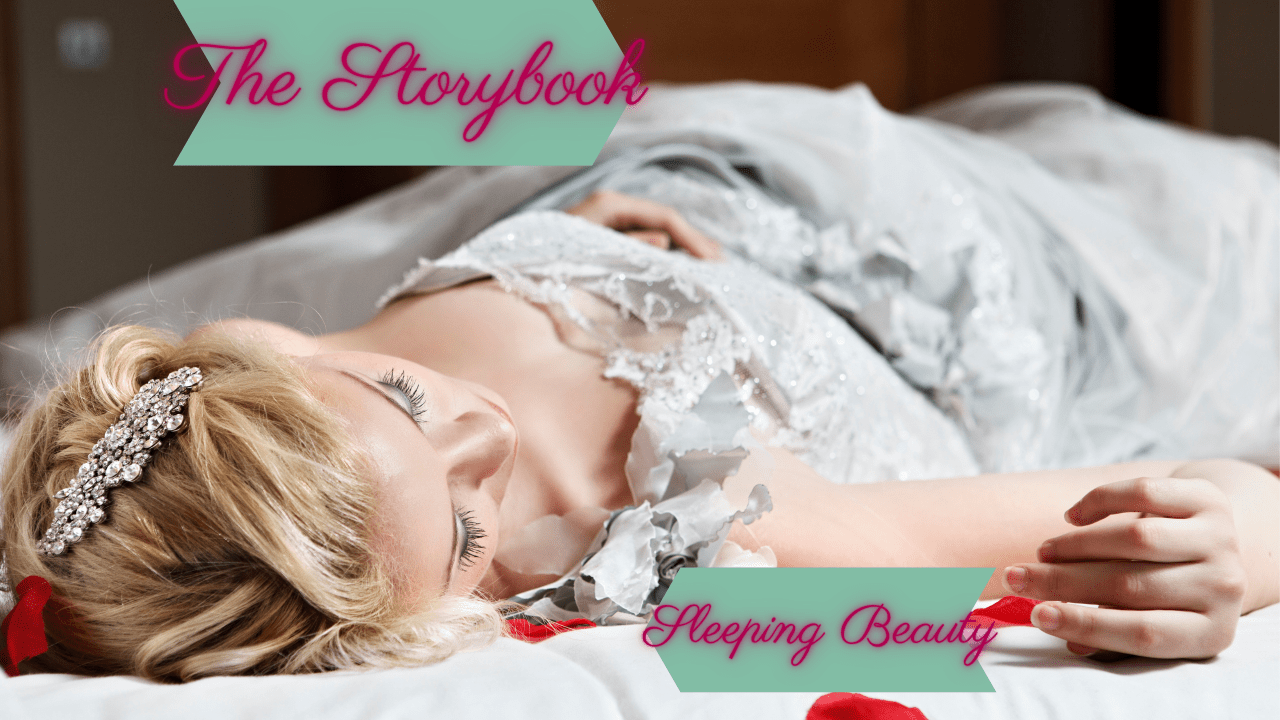
A beautiful maiden is cursed by an evil fairy to fall into a deep sleep from which only true love’s kiss can wake her.
History of the story
Like a lot of our most recognisable fairytales, this one was first published in more or less its current form by Gianbattista Basile, later adapted by Charles Perrault, and ultimately printed by Jacob and Wilhelm Grimm, before being animated by Disney.
The earliest form was included in a set of stories called Perceforest, which had a very Celtic theme, drawn and inspired by the chroniclers of Arthurian legend. This version involved impossible tasks, outlandish curses, a notorious sexual assault, and a removal of an enchanted flax seed as the thing that woke her.
Basile’s version is very dark, and is called, ‘Sun, Moon, and Talia.’ Talia’s father asks soothsayers to predict her future, and is told that flax will be dangerous to her. Flax is a grain, spun to make linen. She does indeed prick her finger on a splinter of flax and falls into a deep sleep, which her father thinks is her death. In his grief, he boards up the palace and leaves. Sometime later, a passing king enters the palace and comes across sleeping Talia. He assaults her, and leaves her there. She eventually gives birth to twins, and one of them sucks the flax out of her finger, waking her up. She is startled to find that she has children, as anyone would be, and she names the children Sun and Moon. The king, like the absolute worst kind of creep (remember, he thinks she’s dead, which makes him not only a rapist, but a necrophile), returns to her. Somehow, they fall in love, despite… all of that, and he promises to come back again for her.
Back in his kingdom, the queen, his actual wife, overhears him sleeptalking about Talia, Sun, and Moon, and she gets the royal secretary to tell her what’s up. She forges a letter to Talia, asking her to send the children for a visit, and when they get there, instructs the cook to kill them and cook them for the king. The cook, understandably, does not do that, and hides the kids, cooking lamb, instead. The king enjoyed his dinner and the queen mocks him for eating his own children. Later, she invites Talia herself to come over to be burned alive, but the king figures it out and instead, burns the queen and her co-conspirators. The cook is fine though because he was cool, and the king eventually marries Talia.
Yeah, so that’s a gross one.
Perault’s version starts off pretty recognisably. A king and queen welcome a baby girl and invite seven fairies to bless the child. An eighth, older fairy shows up, and is aggreeably seated with the others. She had been living alone in a tower for so long, everyone had thought her dead, so that’s why she wasn’t invited initially. Six fairies gave their blessings for grace and beauty, and by then the old fairy was pissed. So she cursed the girl to prick her finger on the spindle of a spinning wheel, and DIE.
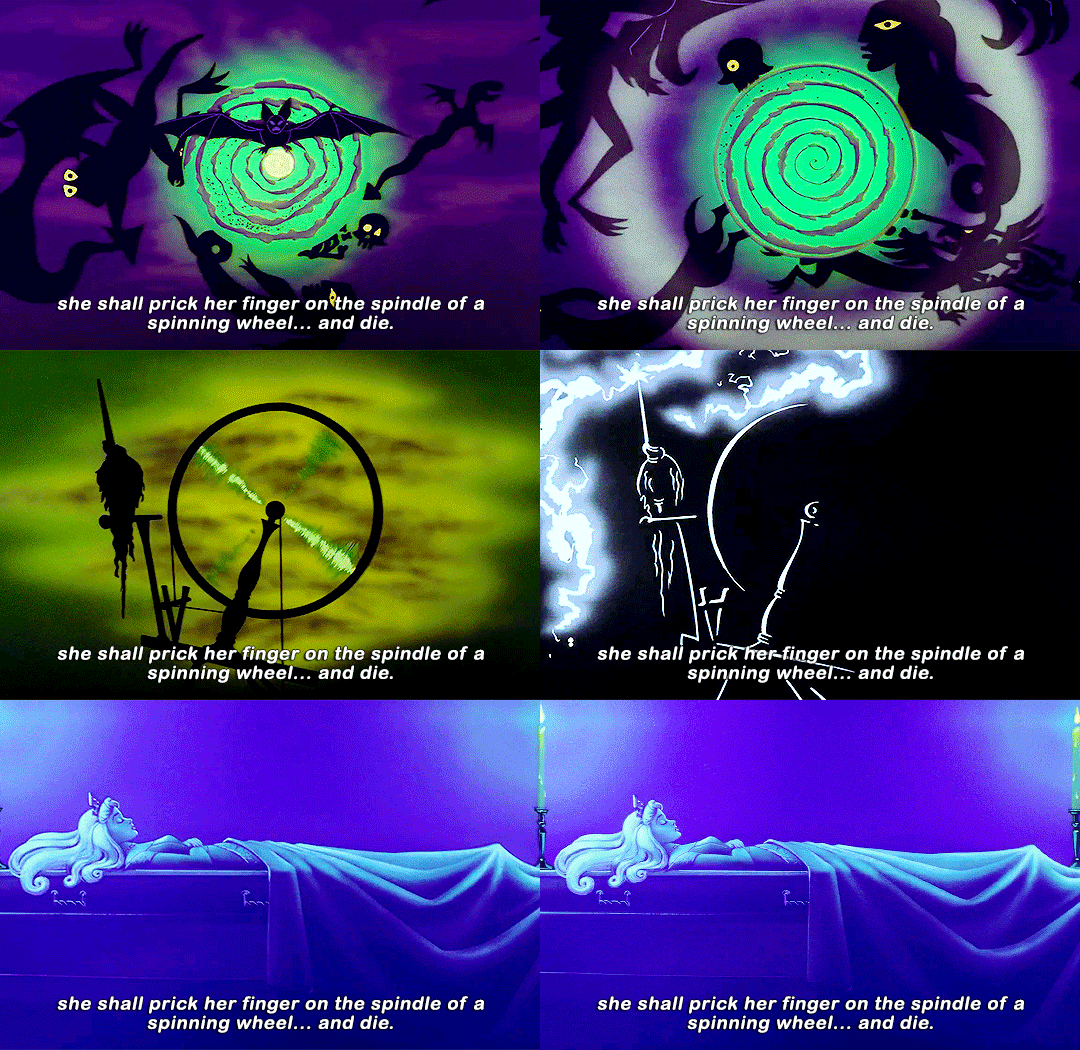
The last fairy amended this by transmuting the death into a very deep sleep that would last a hundred years, and could be broken at that time by a prince. Kiss not specified.
Naturally, all the spinning wheels in the kingdom are destroyed, which we have to assume impacted the textiles economy because spinning my hand take a long time, y’all. The princess lives her life, but in her teens comes across an old woman, spinning on a spinning wheel in the palace. She reaches out to touch it and pricks her finger, fulfilling the curse. The princess is carried to the finest room in the palace and the king orders the last fairy to appear. She guesses that the princess will be freaked out in a hundred years to wake alone, so the fairy puts everyone to sleep, and builds fortifications around the palace: trees and brambles, etc.
A hundred years pass, and a prince stumbles upon the palace. His men tell him the legend of a beautiful princess trapped inside. The prince does what princes do and hack’n’slashed his way in and finds the princess. Overcome by her beauty, he falls to his knees, which breaks the spell.
Cuter, right? Basile needed help.
The princess falls in love instantly and the two chat while the palace attendants wake up. The two marry in secret, and she has two kids Aurora (aww) and Jour, or ‘dawn’ and ‘day’ in English.
Unbeknownst to the prince, his mother was part ogre, so when the prince becomes the king, the queen mother orders the cook to kill and cook Jour, but again, the cook is cool and cooks lamb instead. She then orders him to cook Aurora, but he cooks a kid (goat) instead. She orders him to kill the queen, but he serves a hind (deer) instead. The queen mother eventually catches on and gets a tub together full of snakes and bugs and all sorts, but the king returns home, sees the absolute chaos going on, realises that his mum is an ogress, and she throws herself into the tub, and is eaten. The king, queen, and children live happily ever after.
Now the Grimms called theirs Little Briar Rose, and it doesn’t have the second part with all the cannibalism, though they did include a cannibalistic evil mother-in-law in a separate story. Scholars think that was inspired by St Brynhild, and despite being German, they didn’t really like it. And they departed from the Germanic-ness again, by having the waker kiss the beauty, which was not an element of Germanic stories at the time. The also converted the fairies into wise women.
Tchaikovsky
The Tchaikovsky version follows the Perault version pretty closely, with a few glorious exceptions. The fairies all have delightful names, with the most important being the Lilac Fairy. The evil fairy is called Carabosse, the prince is named Desirée, and notably, the princess is name Aurora (which Disney copyrighted in 2007, causing quite the uproar). The Lilac Fairy chooses the prince herself, and Puss in Boots is at the wedding. Tchaikovsky really was a madman.
But mostly, I just wanted to talk about a piece in Act 1 (Les Quatre Fiancés de le Princesse Aurore), called No. 6, Grand Valse Villageoise (The Garland Waltz). Or as we’ve known it since 1959, ‘Once Upon a Dream.’ That’s right, folks, even if you’ve never seen The Nutcracker, Swan Lake, or any of the ballets that Tchaikovsky actually liked, you are at least familiar with this one.
Sleep
So why is this relevant (besides me just professionally appreciating fairytales)? Well, the next book in my series is called Sleep, for now, and explores many of the same themes. We have a maiden shut away from the world for her own good, we have a powerful evil, deep enchanted sleep, and a battle to uncover hidden secrets.
That’s all I can say for now. You’ll just have to wait and see. But not a hundred years, I wouldn’t do that to you 😉
 Avon Van Hassel