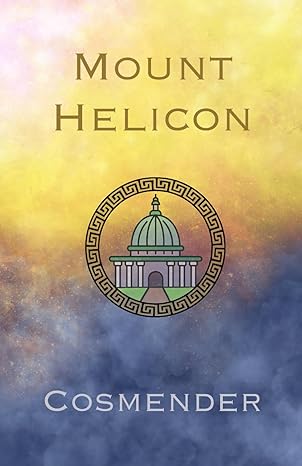
So, I’ve hinted at it a couple of times, but here is the official review of my sister’s book, Mount Helicon.
~This post contains affiliate links. If you’re interested in any of these items, please consider purchasing through the link provided. It gives me a little bit of Jeff Bezos’ filthy, filthy lucre because writing full time is expensive, and he doesn’t need the money for more joyrides in space. 🙂 ~
Characters
Durante Melias
Ah, Durante, you lovable dingus. He is a genius, but I love that he has absolutely no dignity and is fully fine with throwing it all away in favour of survival. It is so real in a way that hurts my pride. You might think, oh I would never be so lame as to hug the legs of a centaur and scream like a little baby; but if you found yourself in a world where the Greek gods and monsters were real and actually trying to fuck with you, yes, you would. And you need to make peace with that.
Urania
Urania is the eldest of the Muses, and the Muse of astronomy and science. She is beautiful and dignified and warm and nurturing. Serious big sister vibes, right down to the Disappointment Voice. She handles the challenges Durante throws at her like a champ.
Tyche
Tyche is the goddess of luck and riches. She is beautiful and chaotic. She actually reminds me of a lot of my friends in that she is gorgeous and smart and amiable, and just makes the worst decisions. It’s not all her fault, though. She likes the finer things, but she can bee a little gaudy, honestly, a lil tacky. But that’s part of her charm.
Lamia
Lamia is one of the ‘villains,’ if you can even call her that. She’s tough and crusty, and at first, she’s quite duplicitous, but she does have a soften side. And we love a redemption arc.
The Other Muses
Now, if you’ve been around here for a minute, you know Calliope is my Muse, and she makes her presence known; but my sister really nailed Thalia’s comedic timing. Thalia is the Muse of comedy, after all, and when she makes an appearance, it’s always stupid, yet perfect. The other muses are there, more in the background, but they come in for the ensemble scenes.
Other Gods
Athena is my girl, I’ve always loved and admired Athena, and in Mount Helicon, she is also really cool. She said a no-nonsense, strategic ballbuster, just as she should be.
Zeus is a douche, oh my god. He’s a big, dumb, egotistical jock.
Aphrodite is cute, and she holds the key to a major plotline. I do like her, but she’s not as prominent as other Olympians.
Dionysus is a dick, but drugs will do that to a person, lol.
Other Baddies
Corvus is pretty cool. She’s Lami’s boss and a magical drug dealer. She’s, mmm, I don’t want to say main antagonist because, whoo boy, there are so many antagonists and they all think they’re the Big Bad. But she is pretty bad, lol.
Settings
Mount Helicon
Mount Helicon is pretty cool. I love the consultation pool and the magic privacy walls. And at the risk of giving too much away, the Underworld is also very cool, it’s giving Indiana Jones energy.
Tyche Tower
Tyche Tower is gaudy as hell and tacky as hell, but in a self-aware, intentional, Disco meets Art Deco kind of way.
Olympus
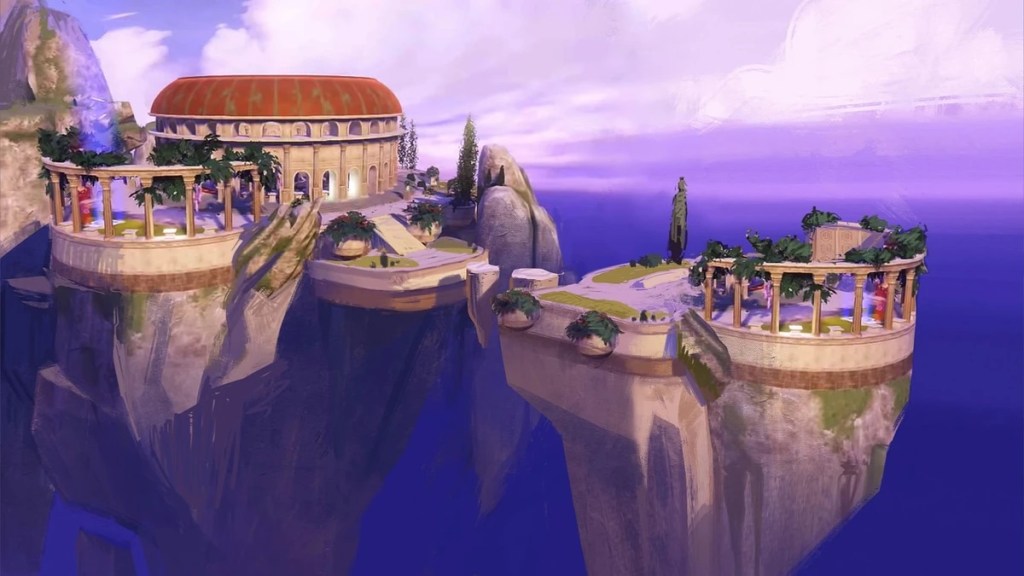
Have you even played Disney Infinity? If you haven’t, you should. It’s expensive and getting dated, and I have so much calcified resentment lol, but still worth it. Anyway, Olympus reminds me of the Hall of Heroes. Actually, I’ll just post a pic.
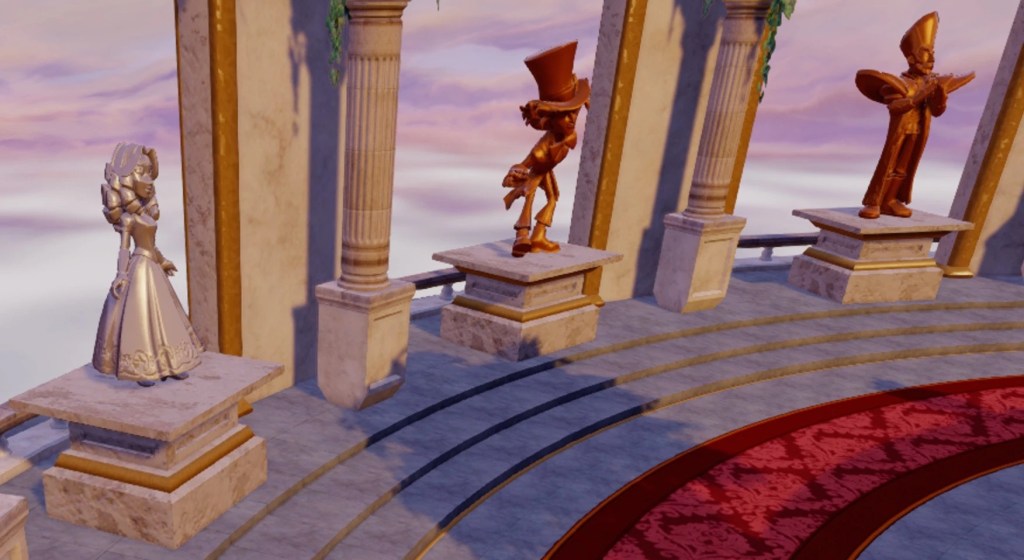
Plot
Ok, so basically, a chaos bug bites the Goddess of Luck, and turns her into the Goddess of Greed, which ruins the vibe for everyone.
See below for a more detailed yet coquettishly spoiler-free discussion of plot as a theme.
Themes
Good versus evil
So good versus evil is a pretty classic theme in a lot of mythology. Mythology is part of religion, and one of the functions of religion is defining morality. However, Greek mythology is compelling to this day because, amid the pettiness and selflessness and selfishness- good and evil traits, there is a lot of nuance and context. Greek heroes and villains are complex, rarely pure evil or pure good. So it is in Mount Helicon- the antagonists are that way for a reason, justifiable or not. The good guys are also flawed. Good isn’t 100% good, and evil isn’t 100% evil.
Law versus chaos
Rather than good versus evil, Mount helicon leans on the balance of law versus chaos as the driver of plot. If everyone was lawful (acting according to a predictable code, whether it’s strictly legal or not), it would be a very boring book; and if everyone were chaotic, it would be exhausting and go nowhere. We need the push and pull of ‘here is the plan, but wait! There’s a problem!’ And boy, does this book have a lot of that. The Muses play the role of Law (yes, even Thalia), doing their jobs and helping their clients, then later mounting a measured defense. The Gods (yes, even Athena) play the role of Chaos, pulling out their special powers in a way only they can. The chaos beetle doesn’t help matters.
Hero’s Journey
Of course, we have to address the Durante in the room. The Stages of the Hero’s Journey, as mapped out by Joseph Campbell, are:
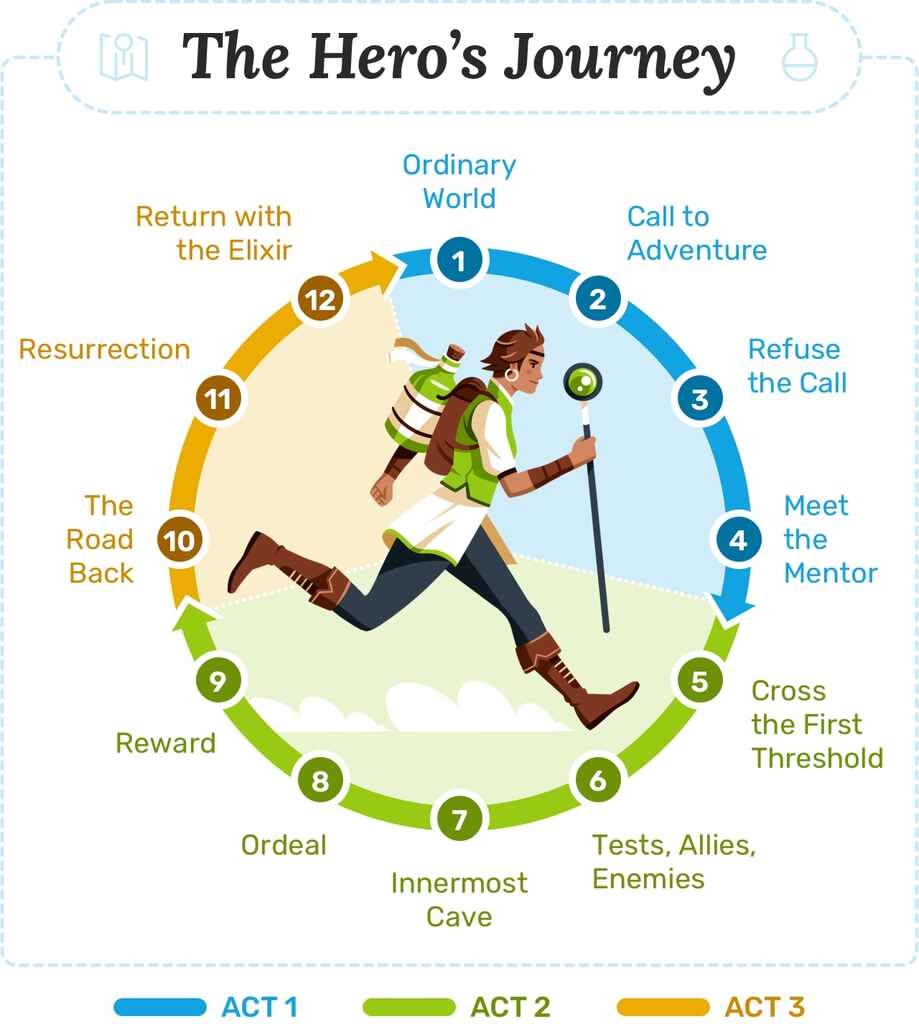
- The Call to Adventure
- Refusal of the Call
- Supernatural Aid
- The Crossing of the First Threshold
- The Belly of the Whale
- The Road of Trials
- The Meeting with the Goddess
- Woman as the Temptress
- Atonement with the Father
- Apotheosis
- The Ultimate Boon
- Refusal of the Return
- The Magic Flight
- Rescue from Without
- The Crossing of the Return Threshold
- Master of the Two Worlds
- Freedom to Live
Now, I’m not going to go into the detail on each of these points, but trust me, they fit. And that is intentional- The Hero’s Journey is seen in many mythologies, not just the Greeks, but they loved it. It is big and splashy and epic, reaching action highs and emotional lows. It’s high stakes and exciting and reaches every corner of the emotional range.
The nature of power
However, one new element that Cosmender introduces, that wasn’t really a concern of the ancient Greeks so much, is the nature of power. The ancients had a fairly strict social structure with not a tonne of room for mobility, much less in the realm of Gods and mortals, but they had the usual sorts of sources: money, strength, wisdom. In this case, we’re examining power in the form of inspiration, luck, and influence. But what is power, like what actually is it? What does it look like? What is it made of? Who can have it? Who can use it? And what happens if the wrong person gets it? We know what Zeus does with it, we know what Ares does with it. We know what Athena and Aphrodite do with it. What happens if someone less Lawful gets it? What about Dionysus? What about Tyche? What about a mortal? How does that change the nature of power, and how does it change the law versus chaos dynamic?
So, there you have it, my sister’s book. It’s a lot of fun. Buy it here.

