Ordinarily, I don’t like to do too many similar posts in a row, and I know I’m posting a biography directly following a double biography, but I have to strike while the iron is hot. I’ve just arrived home from a trip to the UK, where I visited one of his gardens, so it’s relevant. Plus, what better time to talk about gardens than the spring?
Lancelot Brown was born on August 30, 1716, in Kirkharle, Northumberland. His mother, Ursula, worked in service for Sir William Loraine at Kirkharle Hall, where his father, William Brown, was the land agent. After school, Lancelot got a job at Kirkharle, working for the head gardener’s assistant in the kitchen garden. When he was 23, he began moving around the country, working in various gardens until he got his first commission, a new lake in the park at Kiddington Park, Oxfordshire.
In 1741, he went to Stowe Gardens, where he worked under William Kent, probably Britain’s next most famous gardener. He stayed here for nearly ten years, during which time, his employer, Lord Cobham allowed him to take freelance commissions from other landowners, which helped him grown his reputation as a landscape gardener. He was a skilled horseman, and that allowed him to not only travel quickly, but assess the properties quickly. Indeed, he earned his nickname, ‘Capability,’ from his habit of telling people that their land had capability, or potential, for improvement.
In the 1760s he was already known to the Crown, having been appointed by King George III as Master Gardener at Hampton Court Palace, and he was earning enough from commissions to buy an estate off the Earl of Northampton, where he was appointed High Sheriff of Cambridgeshire and Huntingdonshire. Not bad.
On February 6, 1783, he suddenly collapsed on the doorstep of his daughter’s house after a night out, and subsequently passed away. He was buried in the churchyard outside his estate, and left what would be valued at £6m to his family.
Famous gardens
Several of Brown’s gardens survive to this day. You may have heard of some of them
Cardiff
Nearest and dearest to my heart, is the central courtyard of Cardiff Castle. We’re going to cover in a second why I didn’t appreciate it at the time for what it was.
For those of you who don’t know, I am an American, but I went to university in Cardiff. I got my undergrad in Archaeology there, so I was there for three years, and obviously, as a medievalist, I spent a lot of time at the castle. A lot of the recogniseable details of Cardiff Castle are attributed to the Marquis of Butte, who’s aesthetic is on full display in the Tý, or House, the residential part of the Castle, where the Marquis and his family actually lived. However, the most seen and used area, the courtyard and Norman Keep on its lil motte (or small hill inside the castle), are the work of Capability Brown.
Now, as the name implies, the Norman Keep does date back to the Norman Conquest. Brown didn’t build that. But the motte originally had a moat, which he filled in, and he added a spiral path up the motte, which was replaced later by a staircase at the front. You can still see indentations of the spiral path, though. He also removed all of the other small buildings and a full height wall, complete with its own buildings, which had spanned the distance from the gate entrance to the Keep. The foundations of that wall are still there, but it is said that the stones from that wall built many homes in Cardiff after that. The result was a flat, smooth lawn, with the Norman Keep standing proud in the centre.
Style
When I was doing research for this post, I came across the extant garden at Cardiff Castle, and I was very confused. Garden? What garden? I’ve been all over that castle, where is the garden? There are gardens and parks all over Cardiff, but no, they’re talking about the one inside the Castle.
Right there.
That one.
You’re looking at it.
The confusion came from not yet fully understanding the aesthetic of 18th century gardens and Capability Brown’s influence, specifically. I knew he was a big deal, I knew the name, but gardening, to me, was very much hedge mazes and rose bushes, that is the exact opposite of what we’re looking at here.
To understand, we have to look back, back further than the 1760s. That sort of formal, geometrical style of gardening was the norm for most of British history, and it came back after Brown. It takes a lot of upkeep, which requires a gardening staff, which is a form of conspicuous consumption; it often features exotic plants, which shows off wealth; and it takes up massive parcels of land that could be used for crops but instead is used for leisure and beauty. Also pretty plants with pretty smells. You get it.
Enter, the Enlightenment. What is the nature of Man? What is the nature of nature? Is man higher than God?
Also, tension was cooking in Europe, so travel to Europe was awkward. Brown died before the French Revolution and the following Napoleonic Wars, but he would have known about the American Revolution. Change was in the air.
At this time, we had the birth of the staycation, or their version, which was taking sketching holidays to the Lake District. Basically, they were stuck inside the house and were forced to appreciate what they had. Britain learned to fall in love with their own natural beauty. It was a very pariotic time.
Capability Brown was a pioneer in this area. When he said a property had capability, he meant it had natural beauty he could enhance. He loved a flat lawn, or a gently rolling hill, maybe an accent bush, like a beauty mark on the upper lip of a fine lady. Not for him was the hedgerow or orchid house. The idea was a vista, wide open space- a pastoral countryside captured, tamed, and nurtured within the property of a landowner. The simple, unadorned, natural beauty of Britain. Nothing fussy or frilly. Look at the gardens at Versailles- you wouldn’t want anything fake and French like that, would you? Ew.
And people ate it up. It was the minimalism craze in the 1760s. Rich people love conspicuous underconsumption, as well. It’s still a lot of perfectly good land that just…had nothing on it lol, and a massive staff required to keep that lawn looking meticulously unmanicured. It requires the same amount of upkeep, it’s every bit as curated and deliberate as a more traditional looking garden.
But god, they make for some really nice paintings. The picnics you could have on that lawn, can you imagine?
So that wide, smooth, flat lawn with a tidy Keep on a moat-less motte at Cardiff Castle? That IS the garden.
A few years ago, I wrote a Valentine’s Day blog about Napoleon and Josephine, and it kind of morphed into the dynamics of relationships between famous people. In 2023, we had fun with American literature heavyweights, Herman Melville and Nathaniel Hawthorne. So, today, we’re looking at two heavy hitters of English fantasy: JRR Tolkien and CS Lewis.
~This post contains affiliate links. If you’re interested in any of these items, please consider purchasing through the link provided. It gives me a little bit of Jeff Bezos’ filthy, filthy lucre because writing full time is expensive, and he doesn’t need the money for more joyrides in space. 🙂 ~
JRR Tolkien
John Roland Reuel Tolkien was born on January 3, 1892, in Bloemfontein, in what is now South Africa, to Mabel and Arthur Reuel Tolkien, who was a bank manager. At the time, South Africa was under the rule of Great Britain, and Arthur Tolkien was the head of the Bloemfontein office of the Bank of Africa, which was actually a British bank.
Mabel took John and his younger brother, Hilary, to England when John was three. It was meant to be a long visit with family, but while they were there, Arthur, who had stayed behind in South Africa, died, of rheumatic fever, leaving his wife and two kids stranded in England with no money. Mabel landed with her parents in Birmingham.
Tolkien’s time in Birmingham seemed idyllic. I’m not going to spend much time exploring his early childhood, but as it happens, I’m going to be passing through Birmingham this month, after a wedding. So keep an eye out on the socials to see what I get up to!
From an early age, Tolkien was interested in languages and could read and write fluently by the age of four. In 1900, when Tolkien was eight, Mabel converted to Catholicism, and Tolkien himself would remain a devout Catholic the rest of his life, which would influence a lot of his work and cause many a rift in his personal life.
In 1904, Mabel died of Type 1 diabetes, as insulin wouldn’t be discovered until 1921. Guardianship of John and Hilary was transferred to Father Francis Xavier Morgan to raise the boys as good Catholics. Tolkien seemed to love Father Francis, who gave him a good upbringing and encouraged his curiosity.
In his youth, Tolkien and some cousins invented their own language while he was learning Latin and Anglo-Saxon. He also learned Esperanto, because of course he did, the big nerd. It was around this time that he also began his first secret society, which centred around drinking tea. I love him so goddamn much.
In October of 1911, he started studying the classics at Exeter College, Oxford, but switched to English language and literature in 1915.
I don’t want to spend too much time on his adorable romance because this post is about a different relationship, but it is relevant. He met Edith Mary Bratt when he was 16 and she was 19. He and Hilary moved into the same boarding house where Edith lived. They clicked immediately, and one of their date things was to sit in an upper story of a tea house and throw lumps of sugar into the hats of people passing below. This was a problem, though, because she was Protestant. Father Francis forbade Tolkien from seeing her anymore until he was 21. So on the evening of his 21st birthday, he wrote a very Wentworth-esque letter to Edith, who, it turned out, was already engaged. However, like Anne, she promptly dumped the dude she was engaged to, because she, too, had never stopped loving John. My heart. Her ex-fiance and his family were suitably annoyed, but what can you do? Edith did convert to Catholicism, though it seems more for John than out of true belief; but it nevertheless forced the person she’d been living with to kick her out. They were formally engaged in 1913.
Maybe one day, if you guys are interested, I can do a post just on Tolkien and Edith. Or Beren and Luthien, as it were. IYKYK.
I also don’t want to dwell too much on the War. This isn’t just about Tolkien (and if it were, this post would be MUCH longer, the dude was fascinating), but it is relevant not only to his work, but his worldview and relationships.
Tolkien actually didn’t voluntarily enlist immediately, as was expected at the time. He wasn’t outright accused of being a coward, but he did seem to be uncomfortably self-aware of his unsuitability for combat, and chose to ask for a deferment, so that he could finish his degree. By the time he did finish, people were beginning to make their disapproval more vocal. He married Edith in March of 1916 and in June, he got his letter. Parting from her, amid the deaths of thousands every day, must have been hell.
During his time in the trenches in France, he lamented his position as an officer, feeling a kinship with- but forced by protocol to remain above- the lower men. He contracted trench fever from the lice, and lost many of his men, including a couple members of his very first secret society, at the Battle of the Somme.
Because of his trench fever, he was sent back to England to recover, where he was involved in the efforts of the Home Front. It was during this time that he first began his attempt to construct his fantasy series, trying to devise a mythology for England.
It always struck me as funny that Tolkien didn’t think Britain had a proper mythology tradition. They have King Arthur and Robin Hood and all the fairy tales and folk tales, and you know, the quite a bit of Celtic and Anglo-Saxon mythology. But maybe I’m just easy to please, I dunno.
Anyway, he spent the rest of the war in England on disability and officially left the military in 1920, but kept his rank as lieutenant.
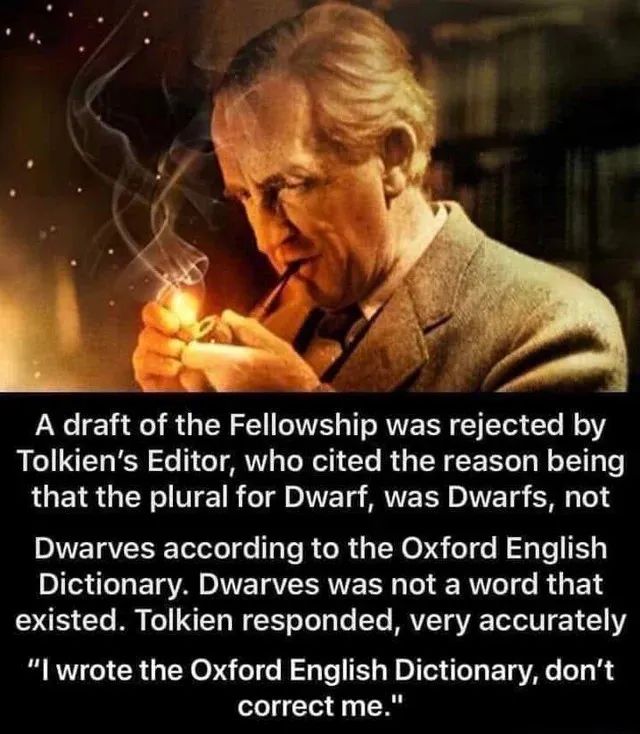
In 1918, his first civilian job was helping with the Oxford English Dictionary (yes, that one), inspiring one of my favourite memes of all time:
In 1925, he returned to Oxford as a professor of Anglo-Saxon. This is where he would write down The Hobbit, famously originally a bedtime story for his son, Christopher; and the first two parts of The Lord of the Rings.
And here, dear reader, is where I end his story.
CS Lewis
Clive Staples Lewis was born on November 29, 1898, to Albert and Flora Lewis in Belfast, which is now in Northern Ireland. His father was a solicitor and his mother was descended from a priest and two bishops.
Lewis, like Tolkien, was an avid reader early on, and also like Tolkien, lost his mother at a young age, though in Flora’s case, it was cancer.
He was fascinated by anthropomorphic animals, a motif he carried into his works and he and his brother, Warnie, would create a fictional world that was run by animals. In the early years of his education, he had private tutors, but after his mother died, he went to Cherbourg House, where he developed an interest in mythology and the occult. It was also here that he abandoned his Christianity and became an atheist.
In his teens, he became obsessed with the literature and mythology of Scandinavia, as well as Greek mythology, and in 1916 was awarded a scholarship to University College, Oxford.
In Oxford, Lewis struggled with England and the English. Almost as a defence, he immersed himself in Irish mythology and language, and even met WB Yeats, a personal hero, twice because he was in Oxford as well. Living as an Irishman in England seemed to intensify his Irish pride and he actively sought out other Irishmen and revelled in the Celtic Revival going on at the time.
Lewis enrolled at Oxford in the summer of 1917 and joined the Officer Training Corps, and within months was shipped off to France. On his birthday, he arrived at the Somme.
Now, you might be thinking, ‘oh my god, they were at the same battle!,’ but no. The Battle of the Somme lasted from July 1- November 18, 1916. Tolkien was there almost the whole time, but he was already back in England for over a year by the time CS Lewis was shipped out. So Lewis would have seen the scars and trenches from the battle Tolkien fought in, but he was in the Somme Valley, not AT THE SOMME at the Somme.
He did, however, still see trench warfare and he did received injuries for mortar fire, for which he was sent back to England to convalesce in 1918. He resumed his studies and graduated with high marks over the next few years.
In 1924, he got a job as a tutor of Philosophy at University College, and in 1925 he was elected a Fellow and Tutor of English Literature at Magdalen College.
Inklings
The Inklings began at Trinity College, at Oxford, in 1931, by a student- Edward Tangye Lean. It was something of a writing and reading club, where other students and some members of the faculty, including both our boys, here, and a number of other people with their own Wikipedia pages, would write stories and read them aloud for feedback. When Lean graduated in 1933, Lewis transferred the club to Magdalen College.
Until 1949, the club would meet in Lewis’ apartments and also at the famous pub, the Eagle and Child. Tolkien’s Lord of the Rings and Lewis’ Out of the Silent Planet were workshopped at these meetings
As a sidenote, reading and writing groups still exist, online and in person. National Novel Writing Month has come under a lot of fire lately, and rightfully so, but I did make a lot of friends through that, as well as through the critique and feedback site, Scribophile, which I have discussed before.
Their Friendship
JRR Tolkien and CS Lewis met at a faculty event in 1926, and Lewis immortalised the moment by noting in his diary that Tolkien was a, ‘smooth, pale, fluent little chap [with] no harm in him: only needs a smack or so.’
Which honestly describes the majority of my own friends.
They hit it off pretty well, both being insufferable stuffy technophobes with no interest in current events and immense interest in folklore, mythology, fantasy, and their rich internal lives.
Again, the majority of my friends. I think I would have loved these guys, if I’d known them.
It’s a piece of writing advice to pick one member of your audience and write to please them. You can’t please everyone, and aiming at one person keeps your tone and message consistent. Stephen King famously writes for his sister, George RR Martin (if I recall correctly) writes for his wife. I write for Kate Whitaker, one of my first friends on Scribophile. And Tolkien and Lewis wrote for each other. For a long time, they were each other’s only audience and strongest support.
And, eventually, the other Inklings.
Now, you may have heard the story that Tolkien had been editing Lord of the Rings absolutely to death, so CS Lewis had it published behind his back. That was certainly the introduction I had to their friendship.
I don’t know where that runour started, and naturally, now that I’m looking for it, I can’t find any reference online.
So good, we can put it to bed.
One thing that does appear to be true is that Tolkien had a tendency to get bogged down in the structuring of his languages and neglected the actual story. It happens to the best of us, and we’re all grateful because those languages lend depth and realism to the world; but we should also thank Lewis, because without his intervention, Tolkien might never have actually finished the damn thing.
In return, Tolkien’s unshakable and fervent Catholicism inspired Lewis to convert to Christianity. Lewis became attracted back to the religion, viewing it as an elaborate mythology system, which appealed to him, but with the added bonus of being, in his words, real.
However, though they came to share faith, it would also be one of the factors that contributed to their decline.
The End
All things eventually come to an end, and it happened for these two as it happens for most of us. For Tolkien and Lewis, there were three main reasons.
The first was the introduction of a man, named, Charles Williams. He was an already-published author and poet when he joined the Inklings in 1939. At first, the three men were good friends, with Tolkien remarking later that it was hard to remember conversations they’d had, because they all agreed so much. However, Williams and Lewis were already fans of each other by the time Williams arrived, and as they grew closer, they grew away from Tolkien.
The second was their individual personalities and approach to work. Tolkien worked very slowly and meticulously, and Lewis worked quickly and prolifically. Tolkien, much as I adore him, could be a bit stuffy and judgemental. Lewis famously did not put Narnia before the Inklings, despite writing the whole series during the time he hosted them, because he knew Tolkien found it shallow, a little silly, and even too inspired by Tolkien’s own work.
The final blow was Lewis’ relationship with a woman, named, Joy Davidman, whom he married in 1956. Joy Davidman was an American poet and author, with a fascinating history of her own. However, and unforgivably, she was a divorcee, something of which Tolkien and his deep faith disapproved strongly. Lewis married her in a registry office, initially so that she and her two sons, whom he also adopted, could stay in the country; but their relationship progressed later to a point where they married properly with a Christian ceremony. The Tolkiens were not invited to the registry wedding, and Lewis didn’t even tell him until long after it happened, which Tolkien later recollected as a very deep cut.
It’s not all doom and gloom, though. While their friendship never regained its pre-WWII closeness, they did remain friends of a sort, and in 1963, when CS Lewis fell ill with kidney failure, Tolkien visited him at home and in the hospital. And when Lewis died on 22 November (the same day as Aldous Huxley and JFK), Tolkien remarked that while he had already been feeling like an old tree losing its leaves, the loss was like ‘an axe-blow near the roots’. Both he and his son, Christopher, attended Lewis’ funeral.
Goals?
I’ve mentioned a few times in this post that I see myself and several of my friends in both Tolkien and Lewis, and their relationship. Creatives often have strong personalities and quirks, and what draws us together can also be what drives us apart. All relationships have their challenges. So, I don’t really think that the decline in their friendship is a bad or even sad thing- it’s normal. And it didn’t even end, not really. So, I think the lesson to learn from them is what made them strong together- celebrating each other’s strengths, even the annoying ones, and also letting your friends’ strengths support your weak areas. So your worldbuilding is impeccable- great, but you gotta work on plot, too. So you pump out a lot of work really quick- cool, just make sure it has meat on its bones when it goes out there. Pick one person and let them be the whetstone that sharpens your sword.
But above all, be honest. If your friend has a new friend, that happens sometimes, it doesn’t mean they don’t still love you. If your friend doesn’t like your fiance, that’s awkward, but you still have to invite them to the wedding. Let them decide if they want to be there or not.
And don’t call your friend’s work shallow, lol. Listen, not all of us are out here trying to invent whole genres. Some of us are just trying to have fun. There is an audience for people who don’t want to learn new languages or memorise lineages. Let him have Father Christmas running around with his Jesus Lion, its’s fine. It’s going to be ok.
For even more Tolkien and Lewis goodness, check out my new Patreon! I’m in the UK this month for a wedding, but I will be visiting some places that were important to Tolkien in Birmingham and I will be posting some fun content over there.
A few years ago, I started a tradition of choosing one word to represent what I wanted to get out of that year. Last year, I chose ‘heal,’ and though I didn’t post it, I did do a lot of healing.
Just as a rundown, in 2023, my best friend died, I got a new cat, and I got a new job at Lush Cosmetics. So, 2024 was all about learning to figure out life with grief, my new baby, and retail. I spread myself among my other friendships, visited some people (and Lush stores) in the UK, started volunteering at our local museum, and dove back into my writing. I also got a lot of medical stuff sorted that I’ve been putting off for a long time. So, I did some literal healing, too.
One big lesson I got that I’m taking with me into 2025 is that, while I love structure and routine, my structure and routine needs to be able to shift and adjust. Think retrofitting a building in San Francisco so that it can stay strong and beautiful, and survive an earthquake.
Pre-retail, I would take all of December off to work on blog posts and my social media posts for the whole year. I have a pretty big raft of posts, and it does take absolutely every day of the month, especially New Year’s Eve and New Year’s Day.
Last year…that did not work. At all, lol. At the time, I thought I’d just have to power through and make it work. I tried writing in the break room, or before or after work, or on my days off. But there was just way too much to do, and all of my mental and physical strength was going toward not losing my mind during the holiday madness. And the way I streamline (shout out to One Word, 2020) my posts prevents me from posting some ahead of time. I post everything at once, because I know that if I try to post throughout the year, I’ll be playing catch-up the whole time, and eventually fall behind, get overwhelmed, and quit. Whatever it is that keeps people steady and focused for a whole year is either still broken in me or never existed to begin with.
So, I’m writing this blog post in August, lol. Obviously, there’s a lot left of 2024 to experience, and hopefully I will remember to update this post in December. The Halloween and Christmas collections are coming soon at work, which means more hours, more mental and physical energy at work, and less of me available for blogging. (Avon editing in January: not as many hours as I’d anticipated, as it turns out, lol) In October, I’m going to Guatemala, where I will have some medical procedures done, so it will be less restful than usual. It might feel odd to read this in January 2025 and see October 2024 referred to in the future tense, but that’s my point. I’m adjusting my structure and routine to fit my schedule and how I think my energy levels will be in the future. If I want to continue to have a blog, which I do; and if I want to keep my job and volunteer gig, which I do, I have to find a way for them to coexist, and that means heavily planning it all out.
I’ll be honest, I don’t really want to be thinking about blogging right now. I just finished outlining the rest of my series, the Beanseller Saga, and I want to get back to drafting! But the blog is important, too. And once I finish the blog and posts, I’ll be done for a year, and it can be doing its thing in the background while I’m drafting my stories. The blog and social media are the ‘business,’ how I connect with my audience. It’s worth it to take time to look after it, especially since I wasn’t able to post for a whole year.
So, this year, I’m focusing on learning, figuring out what I did well and not so well, and finding a more efficient way forward, while juggling everything in my life.
~This post contains affiliate links. If you’re interested in any of these books, please consider purchasing through the link provided. It gives me a little bit of Jeff Bezos’ filthy, filthy lucre because writing full time is expensive, and he doesn’t need the money for more joyrides in space. 🙂 ~
I did really well, this year. I read a lot of books, way more than my average- 23!
I doubt that by the Year of Our Lord 2025, I have to explain the Bridgerton series. Especially if this isn’t your first encounter with my content, you know what Bridgerton is. When she was still around, Breanna had read the books and advised me, under no uncertain phrasing, not to read the books. She was convinced that I would not like them.
She was largely right, romance is not my thing. But the tv show never lasts long enough, does it? That said, I did enjoy Benedict’s story (come on, Season 4!) and Gregoy’s next best. Though to be fair, Daphne’s still holds up, and Eloise’s has so many details that were teased in SEASON 1, I was actually pretty impressed with Shonda Rymes, which is not something I concede often.
I read Northanger Abbey again. Nothing new to report, but I did read it, so it goes on the list. If you want a full review, please let me know. I actually really want to do one.
I did read it because I like it, but also, I’m working on a thing.
Continuing my efforts to finish the Jane Austen canon before passing judgement, I took a bite out of Emma. I usually enjoy the movie adaptations, so I had high hopes, but was ultimately disappointed.
*NOTE TO ADD YET AGAIN* Not every piece of media is for everyone. If you are a big Jane Austen fan, that’s great, you are in the majority. I’m not shitting on her as a person, a woman, an author, a satirist, a trailblazer; nor am I shitting on her work. I just don’t like most of it. Just not my thing.
THAT SAID, I didn’t hate Persuassion. Probably the next best after Northanger, in my opinion. High drama, a relatable protagonist, an awkward brooding hero who doesn’t get under my skin the way Darcy does.
Now, Ridiculous!. I got this from BookBub a thousand years ago, got a few pages in, liked it, but then forgot about it. Came back this year during my Bridgerton withdrawal, and, you guys.
It’s a bit Twelfth Night, right. A woman is widowed and she and her three daughters find themselves destitute, so she throws herself on the mercy of a wealthy relative. He takes them in but forces them to be his servants. Then he dies, and the plain-Jane eldest daughter fakes her own death so that she can assume his identity and use his money to look after her mother and sisters. On her way to check out properties, she encounters a duke and his sister in a carriage crash on the road. She falls in love with the duke, but oh no! She’s supposed to be a man! So she has to keep it locked down. Meanwhile, the sister falls in love with her!
This book is DEVASTATING. It cooked my brain, and I love it. To be clear, I didn’t enjoy it, it’s horrible. But it is fascinating.
I buried the lead, lol. The Five is the story of the Canonical Five victims of Jack the Ripper. Record and testimony-based evidence about their lives and who they were, and how they likely came to cross paths with the most notorious serial killer, arguably, ever.
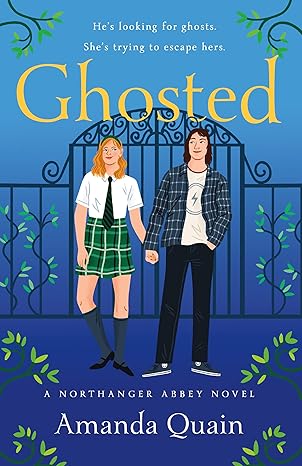
This is a genderbent, paranormal, modern high school AU retelling of Northanger Abbey. I was excited, but to be honest, it fell a little short, for me. It didn’t really go all the way in any of its premises: some characters are genderbent and others aren’t, some characters keep their original personalities and some don’t. It is paranormal, but the bits that are paranormal are a departure from NA. I think it couldn’t quite decide what it wanted to be. Still fun, though.
I tried, guys. I keep trying to like Pride and Prejudice. I read Death Comes to Pemberley, I watched the show. I have read P&P, watched the 1995 and 2006, read Pride and Prejudice and Zombies, watched the movie. I’ve even listened to an audioplay, hoping that the narration was the part I don’t like.
Nope. I don’t like Lizzie, Darcy, or the story lol. I like Jane and Bingley. I want their spinoff.
I discovered Wendy Webb a couple of years ago with Daughters of the Lake, which was very good. The Haunting of Brynn Wilder was less to my taste. I think I just like Kate better than Brynn. Brynn is a bit brooding, a bit suggestible, a bit cow-eyed. She has just lost her mother and that’s why she has gone on holiday, and that’s relatable. She goes on about it a little too much for my taste, but everyone handles grief differently, so I can forgive that. But she herself is a bit too Good and willing to believe the things she ought to be skeptical of. She is described as skeptical and curious, but her actual actions are too credulous to me. And a lot of the other characters are too earnest for me. I need a bit more conflict. It’s a bit Hallmark.
But that setting detail, though. Wendy Webb really shines through her love of the town and the hotel and the Great Lakes area.
Y’all, my sister wrote a book! She worked on this for years, so please give it a look.
Durante Melias is a gifted but struggling chemist when he meets Urania, Eldest Sister of the Muses (dedicated blog post coming, but check out this post,) who decides to take him under her wing. Meanwhile, the Goddess of Luck, Tyche, falls under a curse of greed. Chaos ensues, throwing the entire Greek pantheon to the whims of their wildest traits. Think Disney’s Hercules meets BBC’s Atlantis meets the Everworld series? Did you guys ever read those?
Obstreporous! is the sequel to Ridiculous!, focusing on the main characters’ little sisters and their summer spent together, looking for husbands and adventure. It takes place immediately after the events of Ridiculous! It is a bit Northanger Abbey, actually, with a holiday to a haunted abbey, awful suitors, complicated girl friendships, and overly adventurous girls.
My 1.5 forray into Terry Pratchett. I KNOW, I KNOW. I should have read Sir Terry years ago. I didn’t, ok? No reason, I just didn’t. But now I have to because I used to be a massive Neil Gaiman fan, and he turned out to be a creep, so I have to slide to the Pratchett fandom if I want to carry on loving Good Omens, which is a pillar of my identity.
Anyway, I started with this one because it was recommended to be because of my witchy inclinations, but also because it is a retelling of Macbeth, which appeals to me, as Shakespeare girlie.
So fine, I’m a Terry Pratchett girl, now. Obviously, the witches are the main draw here, and I did really enjoy their Maiden/Mother/Crone and Wiccan/Wise Woman/Wicked Witch archetypes. It feels like Sir Terry really did his research and approached it from a respectful place. As someone who has lived all of those aspects, I didn’t feel mocked or dismissed, more I enjoyed the gags as someone who gets it. They each have their distinct personalities, inner lives, strengths and weaknesses, interpersonal interactions. I think they were handled really well. I enjoyed it.
Whoo boy, this one was a whirlwind. It’s a bunch of fairytale references in a trenchcoat, including the Wizard of Oz, Cinderella, the Princess and the Frog, Through the Looking Glass, and the Thursday Next series. The premise is that stories are kind of like fate, they are sentient in a way, and will impose themselves wherever they are allowed. We have a new witch archetype, the Godmother, as well as the fairytale trope of Good and Evil Sisters. We explore even more of the witches’ personalities, the ethics of magic, and a very New World brand of witchcraft that adds a sort of AHS flavour. If you know, you know.
So, while most of the books on this list were audiobooks, this one is a graphic novel! It was gifted to me a couple of years ago because my friend knows what a Sleepy Hollow nerd I am (dedicated blog post coming later this year!), and I love it. This is a genderbent (ish), sequel-retelling queer coming-of-age high school au lol. It makes sense in a way that Ghosted! doesn’t as much. It’s very cute and fun and has a hell of a twist that I in no way saw coming.
I loved Daughters of the Lake, but this one is a very close second. It has everything you want in a spooky story- witchcraft, hauntings, repressed memories, family secrets, false identities, illicit affairs. It’s The Others meets Practical Magic meets The Secret Garden meets that one Marple with the poppies and cornflowers- you know the one. Halcyon Crane finds out that the mother she thought was dead her whole life only recently died, leaving her a house on a remote island. She returns to find out why she was taken away so young, and uncovers some very dark family secrets. It’s a fun spooky ride, I recommend reading it in the bath.
Kate Forsyth has been one of my favourite writers for a few years now, so when the much teased Psykhe was announced for preorder, I hunted down the one Australian bookstore that would send it to me. Psyche and Eros is one of my favourite of the Greek myths, and Kate did it proud. She weaves together the familiar story with the legendary history, her own brand of retelling, and her hallmark exploration of complicated relationships between women. I would say this is one of the lighter books I’ve read from her, so it’s a good introduction, if you’re looking to get into her historical fantasy stuff.
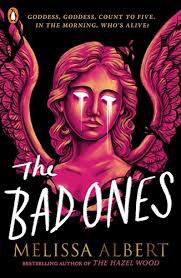
Melissa Albert is queen of my heart, right now. Since I read The Hazel Wood, the stranglehold this woman has had on me is unreal. This one came out earlier this year, and of course I preordered it, as I do with all of her books. Y’all, I really needed this book. It is, at its heart, about the sometimes toxic codependency girls have with their besties, and how sometimes the make-believe games we play as kids, the mythology we form around our own imaginations and relationships, can become too real and take on a dangerous life of their own. A lot of it hit home to me. Funnily enough, in those moments, reading in the car while my mum was at her PT appointment, the electronics in the car would go haywire, and I’d have to say, ‘Calm down, Breanna, she’s not talking about you.’
~~~~
So there you have it, the 23-ish books I read in 2024. Have you read any of these, do you have any thoughts on them? What did you read?
Full disclosure: This review will not be unbiased in any way. Full bias ahead! Jacob and I have been friends for nearly ten years, I’m his biggest fan, and I had a direct hand in this book. Now that’s out of the way, let’s dive in.
Godfather Death, MD, is the story of Danny Grimm, who suffered the loss of his parents and most of his siblings in one tragic event, ten years ago. Since then, he’s lived under the shadow of loss and public scrutiny, trying to live a normal childhood, when everyone knows his story. On the anniversary of the accident, Danny’s mysterious and estranged godfather comes back into his life, triggering a series of events that bend the laws of time and morality, and set everyone on a collision course with destiny. Danny is the only one who can fix the timeline, but it would mean an even bigger sacrifice
Characters
Danny Grimm is a teen navigating the transition out of high school, into the larger world, trying to figure out who he is. However, the citizens of Costa Linda only know him as that boy who survived the car crash that killed almost his whole family. Some even believe him cursed. He’s hot-headed, reactionary, and impulsive, but also open-minded, introspective, and sentimental. He’s a deeply wounded kid, just trying to heal and figure out where to go next.
Dr Miguel Moritz appears at this crossroad in Danny’s life, and at first, looks like he’ll be the mentor that Danny has been searching for. He’s warm, steady, easygoing, and wise, but he comes with a strict no-contact rule from Danny’s aunt, Cass. Something mysterious, something related to Miguel’s true identity, happened in the past to cause a rift between him and the Grimm family.
Macy and Logan are Danny’s best friends. Nurturing and mystical Macy and goofy-but-skeptical Logan are foils to each other, and both temper or encourage Danny’s traits. They also kind of act like a Greek chorus, foreshadowing and adding insight to the events of the story. Also, they each have some of the best lines. I love them so much. Fun fact, it was actually Macy’s tarot scene that got me involved in this project- and then I dug my claws in!
Honourable mention: the late Grimm family. Danny is the youngest of eleven kids, making the nuclear family thirteen strong. Jacob managed to give them all distinct personalities and distinguishing traits. I won’t list examples, but it’s so good.
Plot
So obviously, I’m not going to spoil what actually happens. I will say that there was one twist that completely floored me, and just flung the whole book into a completely different trajectory, and it was already unpredictable, up to that point. It follows a kind of nonlinear structure, in a way, but it also flows organically, and feels very natural. We go on an emotional journey from Costa Linda to an interdimensional (extradimensional? The literal Underworld?) space, through alternate timelines where the past, present, and future exist concurrently, and end up miles away from where we started, as changed as the characters themselves.
Themes
I won’t lie to you, this book is heavy. You all know what I’ve been dealing with over this last year, and I was critiquing this book as it was happening. Jacob hit me up in January to have a look at the opening scenes and Macy’s tarot reading, then Breanna passed in February, so for me, Godfather Death, MD and dealing with losing Breanna are inextricably linked. As the name implies, especially to those familiar with the Brothers Grimm story, this book is all about processing grief. However, it’s also about figuring out where you fit in the world, figuring out where you fit with the people around you, and also juggling public perception of your situation. Not to mention the mental and emotional changes you go through with extreme and sudden grief. It changes you, as a person.
Change is also a big theme. Danny is on the edge of adulthood, his friends are going off to college, and he’s trying to figure out his next steps. After the accident, his two surviving, much older siblings, moved away- one started a new life and one festered. That’s part of why Miguel is such a warm light- Danny doesn’t know why, at first,but Miguel is one of the few things in creation that doesn’t change and won’t leave, for better or worse, and there’s a comfort to that. More than anything else, Danny wants things to go back to the way things were…and stay that way.
Time and timelessness also feature heavily. Obviously, clocks and hourglasses are symbols of death, but the story also plays with the idea of time and how it works and what is immune, and what happens when time stops. This goes back to change, as well, because some things are not meant to stay static.
Liminality is also, well, hmm. It’s hard to explain. But that’s also liminal, isn’t it? There’s a lot of discussion of the space between things, the spaces outside of things. Things that aren’t just one thing or another, but both and neither. Time, space, relationships, personal identity- nothing is concrete or what it appears to be.
Like most of Jacob’s books, another central theme is family. The Grimms, for being a huge family, were close and tight-knit. Danny’s found family is just as important, in some ways and at some points, even more healthy and beneficial than blood relatives.
Lastly, Godfather Death, MD asks the nature of story. Is mythology inherently fictional, are imperical facts immutable? Can the details of a true story be changed or interpreted? Just because a story is made up, does that mean it’s not true?
Style
Jacob’s style is so breezy and conversational, it reads like a friend telling you the story. He usually writes for a Young Adult and Mixed Generation audience, and one thing most readers familar with his work will notice is all the swears! *gasp!* This book has Big Kid Words, for sure, but I actually feel like it adds to the pathos. Danny is an adult, he has been through a lot, and there is some mind-bending shit going on. I think he’s allowed to drop an f-bomb, if he wants to. It also highlights the anger issues he has that are very likely related to the trauma and stress he lives with. I also think it really drives home that this is not a Kid’s Book. Of course, children do deal with grief and dark matters, but this book is definitely on the older edge and quite a bit more high concept.
Conclusion
It’s taken me all day to write this post because I want to do it justice. I’m not exaggerating by saying that it’s been a huge part of my healing journey. It gave me something to do, it’s been the most ‘work’ I’ve done all year since I’m not writing. When Breanna passed, Jacob actually considered giving me some space from it, but I was like, ‘no, I need this’ lol. The biggest part of it, though, was that it was the story I needed at a time when I needed someone to know what I was going through. Danny feels like a therapy partner for me, I feel like we went through this together. And Jacob has a way of wording things I’m too unfocused to say right. He put what I was feeling into words, and that was so validating. I also connected a lot with the other characters; from Mystic Macy to Logan with his conspiracy podcast and Hardboiled Katie, Older Brother Zeke, my INFJ goth king Miguel. Everyone feels real, like someone I know.
This book is just really important to me, and I can’t say enough about it. Plus, it’s a really exciting story, on its own, and I’m so honoured that Jacob asked me to be a part of it.
SURPRISE! We’re making pumpkin spice! I tricked you.
I can feel the squeals of delight and the groans of dismay. Neither concern me, we’re pressing on. I have a soapbox, and I will have my say.
This year, as you might have heard Starbuck crowing from the battlements, marks 20 years of the iconic Pumpkin Spice Latte, and we’re marking the occasion by looking at the highs and lows.
‘But, Avon!’ you cry, your brow furrowing. ‘Pumpkin Spice season is the fall, this is December! I’ve narrowly survived/ already moved on to Peppermint Mocha season!’
To that, I say, ‘yes, yes, yes, I know. But I have a reason. Just stick with me.’
First, of all, December is my month for recipes. I’ll explain why sometime next year. Secondly, there is no earthly reason why Sweet Baking Spice Blend should be reserved for just a few months.
Well, there is one earthly reason: marketing.
But let me start from the beginning.
The PSL
The Squad, 2023
Starbucks claims to have invented the Pumpkin Spice Latte (PSL) in January 2003 for their holiday drink line, though the first actual appearance seems to be late 2004. A company in Indiana claims to have invented it 3 years prior. I don’t know which I believe, and I don’t care which is right. If you guys really want to know, comment, and I’ll do a deep dive.
Regardless of who invented it first and when, it took off with a vengeance. The original recipe was a standard latte with a spice syrup, whipped cream, and topped with pumpkin pie spice. In 2015, pumpkin puree and milk were added to the standard mix, turning the drink thicker, slightly more orange, and inaccessible to people who adhere to a dairy-free diet.
More recently, a new crop of pumpkin drinks have evolved. The iced PSL, Pumpkin Spice Frappuccino, the Pumpkin Spice Chai Tea Latte, and my drink of choice, the Pumpkin Cream Cold Brew.
What is it actually?
At its heart, the PSL is a sweet, creamy, spiced espresso drink that capitalises on the association between fall and the spices used in baking. Take apple pie, spice cake, or, you know, pumpkin pie, and put that flavour in coffee. It’s easy math. No wonder it took off.
The blend of spices is commonly referred to as Pumpkin Pie Spice, and if you’ve ever made pumpkin pie, you know that to be cinnamon, cloves, ginger, allspice, and sometimes cardamom, mace, and nutmeg,
Why is it so polarising?
Well, now we’re really getting into it. The meat and potatoes. It’s obvious why so many people love it, so why do so many people hate it? It comes down to a combination of four things: personal taste, marketing, class anxiety, and our old friend, sexism.
Personal taste- ok, fine. I asked one of my more outspoken friends, real talk, where does the hate come from? And he said he doesn’t really like cinnamon. That’s fair, there’s a lot of cinnamon.
Marketing- there is no denying that there is A Lot of hype around PSL season, and not just from Starbucks. Every coffee shop I know of has their own version, now, and even just some places that sell coffee but aren’t actually coffeeshops. There are pumpkin spice truffles, pancake mix, yogurt, dog biscuits, and the infamous Spam. I don’t include home fragrance items in this list because they have always existed, tapping into the same nostalgic place as the PSL, the smell of fall baking. They have the same root, but one is not the ancestor of the other. But the ubiquitous foodstuffs of the season, even with the same name, is a direct result of the popularity of the Starbucks drink. After all, holiday spice baking is the trend, but ‘pumpkin spice’ everything has only existed in the last 20 or so years.
Not to mention that the animosity itself is part of the marketing strategy. Nothing whips up support like a rivalry. Humans love a team sport. Are you #TeamPSL or #TeamAppleCider? As if you have to choose. But Team PSL will do anything to keep the shelves and stores slinging PSL flavoured items. Myself, included.
Class anxiety- Starbucks is expensive. The PSL is expensive, and getting more expensive every year, and so many boast that they must have one every day. It’s such a part of the culture.
It’s become more than a comfort drink, a treat to celebrate the autumn. It’s a lifestyle, an event, an aesthetic of the sort of person who can wander through the riotous foliage at golden hour, taking a thousand selfies with their plaid vest, sherpa boots, expensive drink and perfect hair and makeup. And it’s almost exclusively white.
So, you can imagine the eyerolling as Yass Queen PSL Season rolls around.
But did you notice the other sneaky little thing they all have in common?
Not just white, not just middle class, but also female.
Sexism- Sweet drinks are generally considered girly, strongly flavoured drinks are girly, comforting drinks are girly. And girly is bad. Girly is weak. Girly is undignified. Girly is cringe. Even other women, the Pick Me Girls, insult their own femininity by compulsively eschewing ‘basicness’ in any form it comes in, just for the sake of it. Enter the Basic Ho, Basic Bitch, or Basic Girl, who fits the aesthetic described above in the woods and enjoys her sweet holiday drinks.
Ah shit, I have a watch and a period. Am I basic?
It’s sad, really; spiced coffee is good. But god forbid women be allowed to like anything, even something as innocuous as a coffee drink that evokes the nostalgia of autumn comfort food. I think more people, fragile men and Pick Mes, would be happier if they just enjoyed things without wondering if it made them look girly to order it.
The PSL is Not Unique
This section is not for the spice-averse. Skip ahead, cinnamon-haters. You weirdos.
I still love you, though.
Spicing drinks is a common practice in the warmer areas of the world where spices are plentiful.
A lot of history nerds are familiar with the original method of preparing hot chocolate, by the Aztec people. It was a salty, spicy, bitter drink, with chili added to give it kick. It would also have been incredibly oily, as raw cacao (not Dutch or alkali processed, like the powder we’re familiar with) contains all the cocoa butter along with the flavourful solids. It’s also roasted, so it has a lovely smoky, toasty flavour. You can get cocoa beans easily, toast them, and grind them yourself, or you can get bricks of (sweetened) hot chocolate from Hispanic markets, or even check out Crio Bru, a company that sells roasted and ground cacao to use like coffee. Just add chili and whatever other spices you want, and you’re there.
Another traditional Mexican drink is Cafe de Olla, which is coffee brewed in an olla, or large ceramic pot, sweetened with piloncillo (the modern sugarloaf), and a mix of spices, usually cinnamon, cloves, and ginger. Possibly also chili, if you’re not a wimp like me. Add cream, and you have a more watery PSL.
Then, of course, we have the queen of spiced drinks, the Masala Chai. In case you don’t know, chai simply means tea, it doesn’t necessarily have to do with spices. ‘Cha’ is the word for tea in many Asian countries (matCHA, kombuCHA, etc) including India, where the most common blends of chai come from, and where we got the associations with the spiced beverage. Again, the standard spices are cinnamon, clove, ginger, anise, and cardamon, though others are also allowed, according to regional traditions. Then, it is sweetened with sugar or honey, and sometimes cream is added. The tea version of a PSL.
For some reason, these drinks don’t inspire the hate that the PSL does. I suspect it’s the, you know, capitalism and sexism. But racism probably contributes to why they’re not as popular. With the exception of the enduring love for chai, which probably has something to do with Imperialism and Britain’s colonisation of India.
I wrote a blog post about tea in Britain, but I could definitively dive deeper, if there is interest.
Recipe
Now, it wouldn’t be a Cauldron post if I didn’t include a recipe, so we’re going to create our own Sweet Baking Spice blend for you to put wherever you fucking want to.
You’re going to need:
Sweet or Ceylon cinnamon chips
Whole cloves
Dried ginger
Cardamom pods
Mace threads
Allspice seeds
Nutmeg pods
Anise seeds
A spoon
A container, like a jar. Glass is best.
*Note: spices can still sometimes be quite pricey. If you would rather get pre powdered versions in shaker bottles or can’t, or don’t want to, get all of these, just get what you want. The only one I really suggest you try to find is the Ceylon cinnamon chips or powdered. Most cinnamon you get in the store is cassia cinnamon, or ‘hot’ cinnamon, which is much cheaper to produce. Ceylon cinnamon has a sweeter, almost creamy flavour and it really changes the profile. This list just represents the natural form these spices take, pick and choose according to your taste and budget.
Steps:
Have a sniff of all of your collected ingredients. Pick your favourite, and make it your base. For me, it’s cinnamon.
Next, pick your least favourite of your assembled spices. For me, it’s cardamom. Still essential, but I find it shines brightest in small quantities.
Pick a spoon to use as your measure. I prefer to write my recipes according to ratios, rather than precise measurements, because it’s easier to scale up and down, as needed.
Into a jar, add three scoops of your favourite spice, one scoop of your least favourite, and two scoops each of your middle favourites. For me, those are clove, ginger, and pink rose petals. Because I’m a fancy girl. (My chai blend is based on a Persian recipe)
With the handle of your spoon, mix the spices until they’re blended. Have a sniff and see if you like the balance.
Add more of the spices you need more of, keeping a tally of how many scoops you’re using, so you can recreate it later.
Once you have a blend you’re happy with, save the recipe somewhere safe, and label the jar. Store it in a cool, dark place so that the volatile oils don’t degrade.
If you have the blend in the whole forms, you can add them to loose leaf tea (a pinch will do), or to a French press, coffee basket, or reusable K Cup to spice your coffee. You can put them into a coffee grinder- or mortar and pestle, if you’re old school- and grind fine to add to espresso drinks, or any other place you put spices.
Enjoy with abandon. Seriously. Get obnoxious with it.
So, there you have it, the definitive rant on Pumpkin Spice. Go forth and enjoy the holidays with Sweet Baking Spice Blend!
In December of 2010, I went on a fieldtrip to Oxford, to the Ashmolean Museum, to pick an item from the collection on which to write an object biography. Essentially, I’d pick a historical artefact and write up how it got from its creator to the museum, and all the steps in between. Ultimately, I chose the Alfred Jewel, but during my search, I stumbled across a Stradivari guitar.
The Alfred Jewel
CENTRE: The Hill Guitar (so sorry for the quality. It hurts my feelings, too.)
Stradivari
Antonio Stradivari was a luthier (stringed instrument maker) from the late 1600s-early 1700s. He was born in 1644, in Cremona, in the Duchy of Milan (before Italy was unified) to an old Cremonese family. He might have apprenticed for another famous luthier, Nicola Amati, though records of his life are sparse and hotly disputed. At the beginning of his career, he was making small violins, similar to others available at the time. His signature style developed slowly over time, with innovation and experimentation, and his reputation grew. The golden period was characterised by a larger body and larger patterns, and a darker, orangish varnish. He died on December 18, 1737, at the age of 93, having made instruments for 75 years. He was buried in the Church of San Domenico, in Cremona.
Stradivari Guitars
During his career, he created over 1,100 instruments, almost a thousand of which were violins. Of those, about half remain. He also made a few guitars, and reports vary as to how many of those are still around. I hear there are five or six, and I know of two, for sure: the Hill Guitar, which I have seen, and Sabionari.
Sabionari
Sabionari was likely crafted in 1679, and it is the only remaining guitar that is still playable. It is identifiable by its thorny curls on the bridge and the beautiful rosette and sound hole.
Johanne’s guitar
Lady Johanne Greenstalk is known, in part, for her beautiful guitar. She can play pianoforte, like any lady, but her true love is her guitar, which she often accompanies with her own voice. It has a flat back, like Sabionari, and not a bowl back like a lute, and was made my the finest luthier in the Capital, as a gift from her uncle, George.
One of the questions I get asked a lot is how to improve your actual writing. The answer is many-parted, and none of them are nice. I wish there were a filter you could put on a word processor to make the words prettier, but there isn’t. It comes down to hard work, vulnerability, and listening. You’re going to swallow a lot of your pride.
I will write other posts in future with more ideas, but the first and best solution is to put your work up for critique. Think of it as a soft launch or a Hollywood premier- you give your work to total strangers and see what they think.
Yes, I said strangers. Let me tell you why.
Your family loves you, your friends love you, that coworker who knows you’re writing a book and is super supportive loves you. These people know that this is important to you and they want you to be successful. But most of all, they love you. The last thing they want to do is hurt your feelings or make you doubt yourself. So they tell you everything they love about it, glowing praise on every page. But where they struggle is in realising that that is the opposite of helping.
Goodreads and Amazon readers don’t love you. They don’t know you. They don’t care about your feelings. They paid money for a book, and by god, it had better be best thing they ever paid $8 for or they are going to leave a 1-star review to warn other potential victims.
I have no doubt that your book is good, that you poured years of your heart and soul into it, that you stayed up all night editing it. I also have no doubt that it is far from perfect. Nothing is. My books certainly aren’t. So, there is always more to do, to tweak, to polish and perfect.
The easiest way to find critiquers is to join an online community, like Scribophile. You can also do it the old-fashioned way, like asking friends for recommendations of who they know who might be interested in reading. The farther away from you, the better.
I know it’s scary to ask strangers to rip apart your baby, and it’s hard to trust. It was hard for me, too. But hear me out.
First of all, on critique sites, you partner with people, often in critique groups, or in a one-to-one exchange. People there are far more interested in getting their own work perfected than stealing your imperfect manuscript. Also, working with these people this closely forms bonds, and friendships develop. These are different relationships than regular friends because they began with honest feedback and a genuine desire to help you fix your work. Some of my closest friends I met on Scribophile and while we chat about everything under the sun now, they’re still among the first people I ask for advice, and they don’t hold back.
If you’re still not sure you can trust a stranger, you can do a few things.
the best thing to do is have a conversation with the person who will be looking at your piece. Try to get a feel for them and be honest about what you’re looking for.
Draw up a contract. Get some kind of understanding in writing. Sometimes, just putting a signature down is enough to keep people honest and make you feel safer.
Lastly, (and you should do this anyway) print off a copy of your full manuscript, put it in an envelope, and mail it to yourself. NEVER OPEN IT. This is called a Poor Man’s Copyright, or a Postal Service Copyright. I don’t know if this is legally binding in other countries, but it is in the US. Essentially, you’ve made the Postal Service a witness; that way, if someone tries to publish your work as their own, you have proof that you wrote it first and the stamp will back you up. But it’s void if you open it, so put it somewhere safe and leave it alone.
The three published girls, and one I’ve worked on for too long
Now that you’re protected, how do you even go about asking? Well, the sites obviously are designed around getting matched up, so they make it easy to find people, but you still have to start the conversation. Often, a user can just browse work up for critique, at which point, you’ll find someone after they’ve already started critiquing. In this instance, you start by thanking them for their time and consideration, then follow up with questions and clarifications about their feedback. If you like the way they critique or their ideas, you can ask if they wouldn’t mind looking at other pieces (chapters, other projects, etc).
If you want to start fresh directly, the best way is to start with an email. Thank the person for offering to help and thank them in advance for their time. Lay out the concerns you know you have about your manuscript (don’t look at me like that, you know the areas you’re not super confident about), the kind of feedback you’re looking for, and any questions or advice you’d like.
For instance, I know I struggle with pacing and also setting description. Often, I ask for critiques very early on in the drafting process when the prose is sloppy and the spelling is atrocious, and that’s because I want feedback on big picture ideas before I flesh out the details: does the plot work, are the characters believable, is it FUN to read? I don’t need line edits or ideas about tighten up the scenes. Lastly, maybe there’s one plot hole I just can’t get around, or I’m not sure I handled a certain issue well, and I’m open to suggestions.
If you’d like a separate blog post on types of critique and what to look for in a critiquer, let me know.
So once you have the feedback, it’s time to use it. Always thank the person for their time, even if you don’t like what they said, be gracious. Critiquing is hard, physically, mentally, and emotionally.
Now, here’s the hard part. Ideally, you shouldn’t start making changes until you have at least three critiques and the reason why is numbers. If one person thinks you should change something, that’s an opinion. Just the opinion of one reader. But if multiple people think you should change, that’s a consensus. Always carefully consider these the strongest. If you’re willing to fight for something- for reasons other than because you like it or you had fun writing it- then you should keep it. You know your story better than anyone. But be sure you know why you’re keeping something your readers want you to change, and make sure it’s a good reason.
On the other hand, if only one person hates something, and they make a good enough point, go ahead and change. Go with your gut. But this is the time to take a step back and be objective. Once you have an audience, the story is no longer your baby, you have to remove emotion and sentimentality and see it as a product you plan to sell. That doesn’t mean to sell out completely and go fully commercial, but the point of market research is to see what your readers want so you can give it to them. It’s still your story, but here is where you make it marketable.
It’s going to be hard, you’re going to have to swallow a lot of pride and likely delete a lot of your favourite parts, but that’s the life. You can do it! And you’ll be so proud of it when it’s done.
So, this snuck up on me, like most things do, these days. I knew the anniversary was coming up, but I thought it was four years, not five. I set up the sale (41% in the US, 52% in the UK, Kindle version of Magic Beans), I scheduled all the social media posts, but I was just celebrating the anniversary in general. It was meant to be a sort of farewell to the Covid era that derailed my writing and publishing schedule, not anything special. But then I did the math, and it turns out- hey, did you guys know that it’s 2023 already?? That’s kind of a big deal!
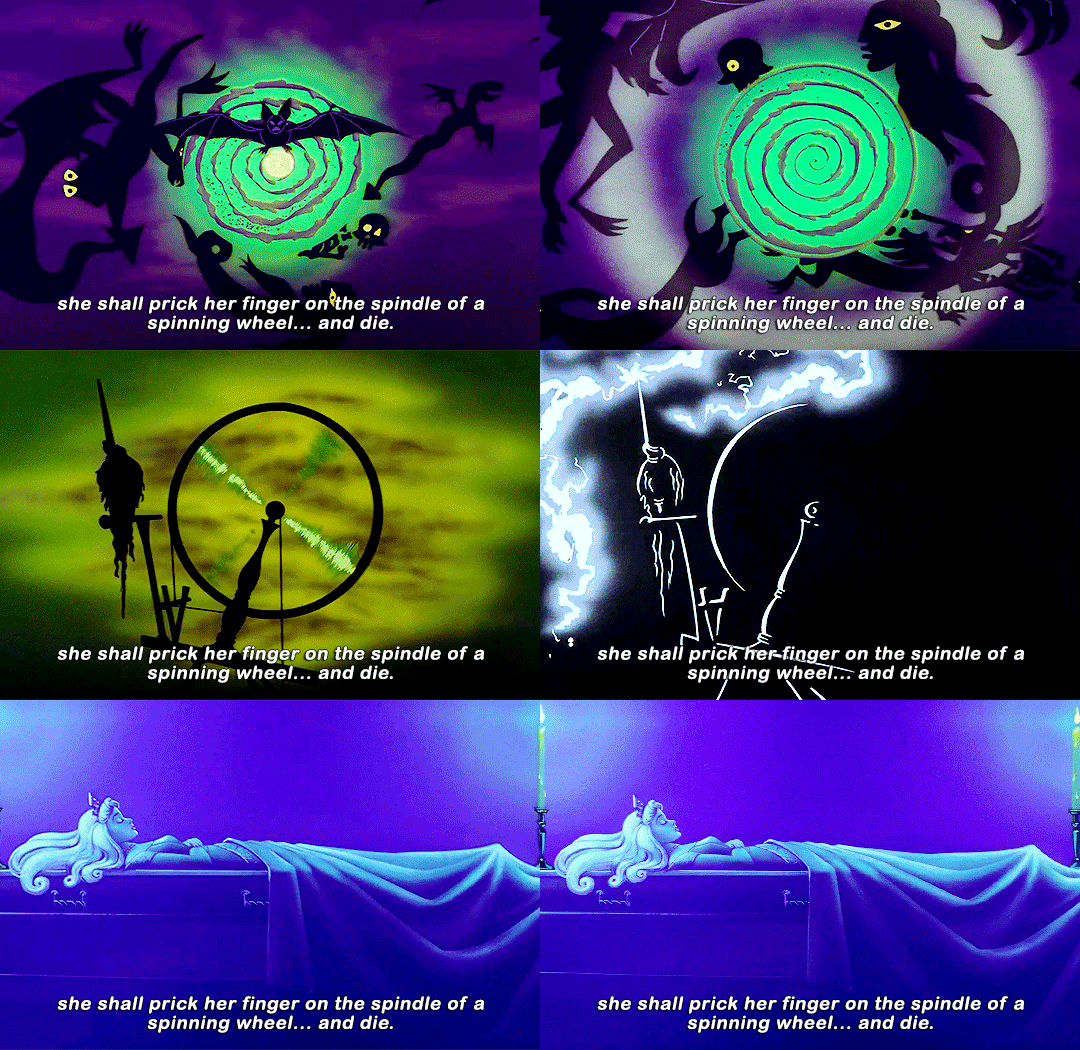
A beautiful maiden is cursed by an evil fairy to fall into a deep sleep from which only true love’s kiss can wake her.
History of the story
Like a lot of our most recognisable fairytales, this one was first published in more or less its current form by Gianbattista Basile, later adapted by Charles Perrault, and ultimately printed by Jacob and Wilhelm Grimm, before being animated by Disney.
The earliest form was included in a set of stories called Perceforest, which had a very Celtic theme, drawn and inspired by the chroniclers of Arthurian legend. This version involved impossible tasks, outlandish curses, a notorious sexual assault, and a removal of an enchanted flax seed as the thing that woke her.
Basile’s version is very dark, and is called, ‘Sun, Moon, and Talia.’ Talia’s father asks soothsayers to predict her future, and is told that flax will be dangerous to her. Flax is a grain, spun to make linen. She does indeed prick her finger on a splinter of flax and falls into a deep sleep, which her father thinks is her death. In his grief, he boards up the palace and leaves. Sometime later, a passing king enters the palace and comes across sleeping Talia. He assaults her, and leaves her there. She eventually gives birth to twins, and one of them sucks the flax out of her finger, waking her up. She is startled to find that she has children, as anyone would be, and she names the children Sun and Moon. The king, like the absolute worst kind of creep (remember, he thinks she’s dead, which makes him not only a rapist, but a necrophile), returns to her. Somehow, they fall in love, despite… all of that, and he promises to come back again for her.
Back in his kingdom, the queen, his actual wife, overhears him sleeptalking about Talia, Sun, and Moon, and she gets the royal secretary to tell her what’s up. She forges a letter to Talia, asking her to send the children for a visit, and when they get there, instructs the cook to kill them and cook them for the king. The cook, understandably, does not do that, and hides the kids, cooking lamb, instead. The king enjoyed his dinner and the queen mocks him for eating his own children. Later, she invites Talia herself to come over to be burned alive, but the king figures it out and instead, burns the queen and her co-conspirators. The cook is fine though because he was cool, and the king eventually marries Talia.
Yeah, so that’s a gross one.
Perault’s version starts off pretty recognisably. A king and queen welcome a baby girl and invite seven fairies to bless the child. An eighth, older fairy shows up, and is aggreeably seated with the others. She had been living alone in a tower for so long, everyone had thought her dead, so that’s why she wasn’t invited initially. Six fairies gave their blessings for grace and beauty, and by then the old fairy was pissed. So she cursed the girl to prick her finger on the spindle of a spinning wheel, and DIE.
The last fairy amended this by transmuting the death into a very deep sleep that would last a hundred years, and could be broken at that time by a prince. Kiss not specified.
Naturally, all the spinning wheels in the kingdom are destroyed, which we have to assume impacted the textiles economy because spinning my hand take a long time, y’all. The princess lives her life, but in her teens comes across an old woman, spinning on a spinning wheel in the palace. She reaches out to touch it and pricks her finger, fulfilling the curse. The princess is carried to the finest room in the palace and the king orders the last fairy to appear. She guesses that the princess will be freaked out in a hundred years to wake alone, so the fairy puts everyone to sleep, and builds fortifications around the palace: trees and brambles, etc.
A hundred years pass, and a prince stumbles upon the palace. His men tell him the legend of a beautiful princess trapped inside. The prince does what princes do and hack’n’slashed his way in and finds the princess. Overcome by her beauty, he falls to his knees, which breaks the spell.
Cuter, right? Basile needed help.
The princess falls in love instantly and the two chat while the palace attendants wake up. The two marry in secret, and she has two kids Aurora (aww) and Jour, or ‘dawn’ and ‘day’ in English.
Unbeknownst to the prince, his mother was part ogre, so when the prince becomes the king, the queen mother orders the cook to kill and cook Jour, but again, the cook is cool and cooks lamb instead. She then orders him to cook Aurora, but he cooks a kid (goat) instead. She orders him to kill the queen, but he serves a hind (deer) instead. The queen mother eventually catches on and gets a tub together full of snakes and bugs and all sorts, but the king returns home, sees the absolute chaos going on, realises that his mum is an ogress, and she throws herself into the tub, and is eaten. The king, queen, and children live happily ever after.
Now the Grimms called theirs Little Briar Rose, and it doesn’t have the second part with all the cannibalism, though they did include a cannibalistic evil mother-in-law in a separate story. Scholars think that was inspired by St Brynhild, and despite being German, they didn’t really like it. And they departed from the Germanic-ness again, by having the waker kiss the beauty, which was not an element of Germanic stories at the time. The also converted the fairies into wise women.
Tchaikovsky
The Tchaikovsky version follows the Perault version pretty closely, with a few glorious exceptions. The fairies all have delightful names, with the most important being the Lilac Fairy. The evil fairy is called Carabosse, the prince is named Desirée, and notably, the princess is name Aurora (which Disney copyrighted in 2007, causing quite the uproar). The Lilac Fairy chooses the prince herself, and Puss in Boots is at the wedding. Tchaikovsky really was a madman.
But mostly, I just wanted to talk about a piece in Act 1 (Les Quatre Fiancés de le Princesse Aurore), called No. 6, Grand Valse Villageoise (The Garland Waltz). Or as we’ve known it since 1959, ‘Once Upon a Dream.’ That’s right, folks, even if you’ve never seen The Nutcracker, Swan Lake, or any of the ballets that Tchaikovsky actually liked, you are at least familiar with this one.
Sleep
So why is this relevant (besides me just professionally appreciating fairytales)? Well, the next book in my series is called Sleep, for now, and explores many of the same themes. We have a maiden shut away from the world for her own good, we have a powerful evil, deep enchanted sleep, and a battle to uncover hidden secrets.
That’s all I can say for now. You’ll just have to wait and see. But not a hundred years, I wouldn’t do that to you 😉
This Jane Austen blog brings Jane Austen, her novels, and the Regency Period alive through food, dress, social customs, and other 19th C. historical details related to this topic.





















 Avon Van Hassel
